
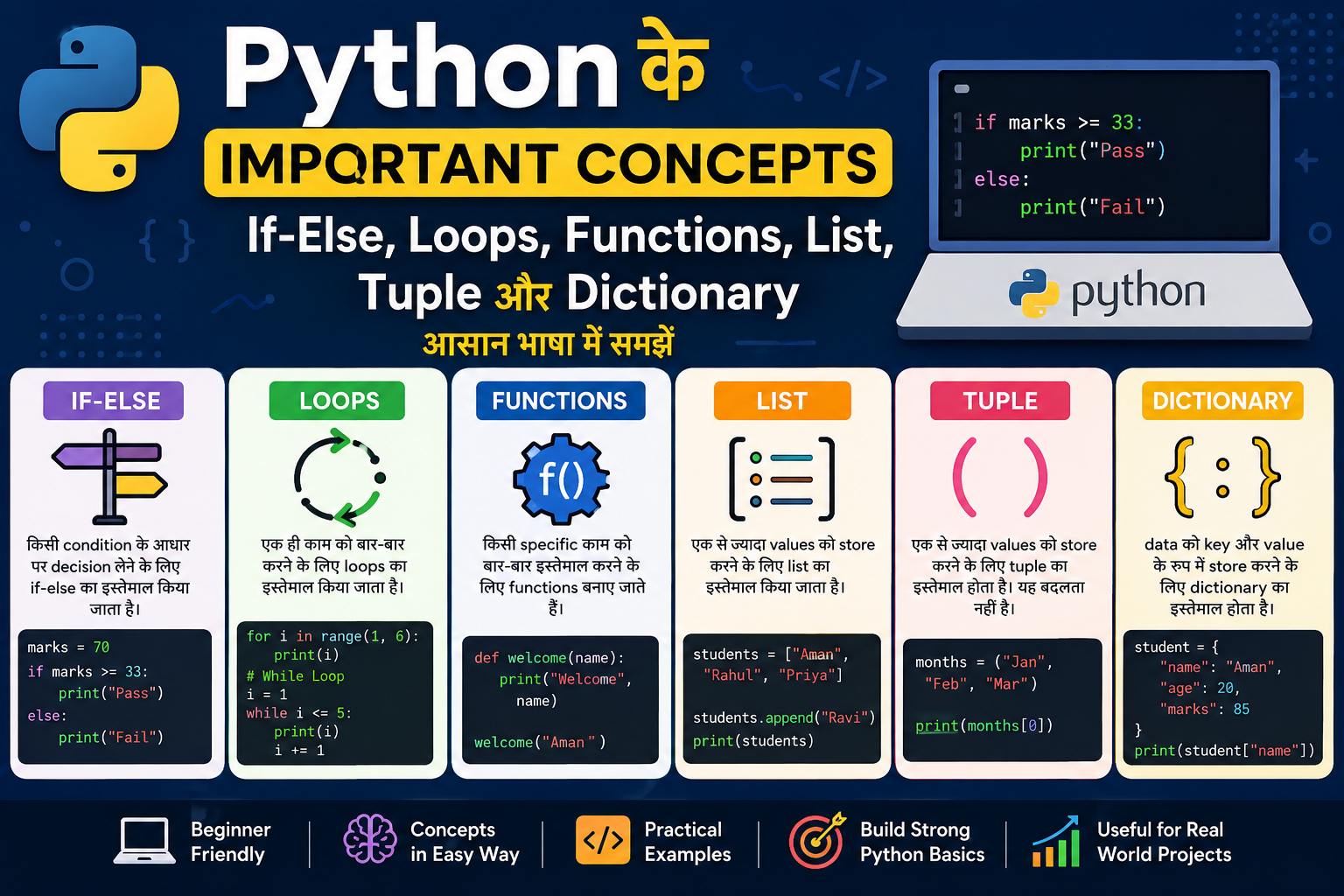
Python के Important Concepts: If-Else, Loops, Functions, List, Tuple और Dictionary आसान भाषा में
अगर आपने Python सीखना शुरू किया है, तो केवल Python का syntax जानना काफी नहीं है। Python में काम करने के लिए आपको कुछ basic concepts को समझना भी जरूरी है।
इसमें If-Else, Loops, Functions, List, Tuple और Dictionary बहुत important हैं। इनका इस्तेमाल छोटे programs से लेकर बड़े software projects तक में किया जाता है।
इस tutorial में हम इन सभी concepts को बिल्कुल आसान भाषा में समझेंगे और जानेंगे कि इनका इस्तेमाल कब और क्यों किया जाता है।
Python में If-Else क्या है?
हम अपनी daily life में भी conditions के आधार पर decision लेते हैं।
जैसे: अगर बारिश हो रही है – छाता लेकर जाना है।
अगर बारिश नहीं हो रही है – छाते की जरूरत नहीं है।
Programming में भी इसी तरह किसी condition के आधार पर decision लेने के लिए If-Else का इस्तेमाल किया जाता है।
If का इस्तेमाल कब होता है?
जब हमें किसी condition को check करना हो, तब if का इस्तेमाल करते हैं।
उदाहरण के लिए किसी student के marks check करने हैं:
marks = 70
if marks >= 33:
print(“Pass”)
यहाँ Python check करेगा कि marks 33 या उससे ज्यादा हैं या नहीं।
Else क्या करता है?
अगर if की condition सही नहीं होती है, तो else वाला हिस्सा चलता है।
marks = 25
if marks >= 33:
print(“Pass”)
else:
print(“Fail”)
यहाँ marks 33 से कम हैं, इसलिए result Fail आएगा।
If-Else का इस्तेमाल कहाँ होता है?
If-Else का इस्तेमाल कई जगह किया जा सकता है:
- Student result check करने में
- Login system में
- Age verification में
- Password check करने में
- किसी product की availability check करने में
- Online forms में
- Games में decisions लेने के लिए
अगर आप Python में applications बनाना चाहते हैं, तो If-Else को समझना बहुत जरूरी है।
Python में Loops क्या हैं?
मान लीजिए आपको एक ही काम 100 बार करना है।
अगर आप वही code 100 बार लिखेंगे, तो program unnecessarily बड़ा हो जाएगा।
इसी problem को solve करने के लिए Loops का इस्तेमाल किया जाता है।
Loop की मदद से हम किसी काम को बार-बार automatically करवा सकते हैं।
Python में beginners के लिए दो important loops हैं:
- For Loop
- While Loop
For Loop क्या है?
जब हमें किसी list, sequence या निर्धारित range के items पर एक-एक करके काम करना हो, तब For Loop काफी useful होता है।
उदाहरण के लिए अगर आपको 1 से 5 तक numbers दिखाने हैं:
for number in range(1, 6):
print(number)
इसका इस्तेमाल तब किया जा सकता है जब हमें पता हो कि हमें किस range या collection पर काम करना है।
For Loop का practical use
मान लीजिए आपके पास students की list है:
students = [“Aman”, “Rahul”, “Priya”]
आप एक-एक करके सभी students के नाम दिखा सकते हैं।
for student in students:
print(student)
बड़े programs में इसी तरह loop का इस्तेमाल हजारों records के साथ किया जा सकता है।
While Loop क्या है?
While Loop किसी condition के आधार पर काम करता है।
जब तक condition सही रहती है, तब तक loop चलता रहता है।
उदाहरण:
number = 1
while number <= 5:
print(number)
number += 1
इसका इस्तेमाल उन situations में useful होता है जहाँ हमें किसी condition के true रहने तक काम करना हो।
For और While Loop में अंतर
आसान भाषा में समझें तो:
For Loop: जब हमें किसी collection या तय range पर काम करना हो।
While Loop: जब किसी condition के आधार पर काम को repeat करना हो।
Python में Functions क्या हैं?
जैसे किसी मशीन में अलग-अलग काम के लिए अलग-अलग buttons होते हैं, वैसे ही programming में किसी specific काम को अलग block में रखने के लिए Function का इस्तेमाल किया जाता है।
Function code को व्यवस्थित रखने और उसे दोबारा इस्तेमाल करने में मदद करता है।
Function की जरूरत क्यों पड़ती है?
मान लीजिए आपके program में एक ही काम कई जगह करना है।
अगर आप पूरा code हर जगह लिखेंगे तो:
- Code लंबा हो जाएगा
- बदलाव करना मुश्किल होगा
- गलतियों की संभावना बढ़ेगी
Function बनाने के बाद आप उसी काम को जरूरत के अनुसार बार-बार इस्तेमाल कर सकते हैं।
Simple Function Example
def welcome():
print(“Welcome to my website”)
जब इस function की जरूरत हो:
welcome()
Function में Information देना
Function को information भी दी जा सकती है।
def welcome(name):
print(“Welcome”, name)
welcome(“Aman”)
इससे function ज्यादा flexible हो जाता है।
Functions का इस्तेमाल कहाँ होता है?
Functions का इस्तेमाल लगभग हर बड़े Python project में किया जाता है।
उदाहरण:
- Calculator
- Website
- Billing Software
- School Management System
- Login System
- Data Processing
- Automation Software
इसलिए Python सीखते समय Functions को अच्छी तरह समझना जरूरी है।
Python में List क्या है?
कई बार हमें एक साथ बहुत सारी चीजों को store करना होता है।
उदाहरण के लिए किसी school में students के नाम:
- Aman
- Rahul
- Priya
- Neha
इन सभी names को अलग-अलग variables में रखने के बजाय हम एक List बना सकते हैं।
students = [“Aman”, “Rahul”, “Priya”, “Neha”]
List में एक से ज्यादा values store की जा सकती हैं।
List का इस्तेमाल कहाँ होता है?
List का इस्तेमाल कई तरह के data को store करने के लिए किया जा सकता है:
- Students के names
- Products
- Prices
- Subjects
- Mobile numbers
- Cities
- User records
List की खास बात
List को जरूरत के अनुसार बदला जा सकता है।
हम इसमें:
- नया item जोड़ सकते हैं
- item remove कर सकते हैं
- item update कर सकते हैं
- items को sort कर सकते हैं
उदाहरण:
students.append(“Ravi”)
इससे list में नया student add हो जाएगा।
Python में Tuple क्या है?
Tuple भी List की तरह एक से ज्यादा values store करने के लिए इस्तेमाल होता है।
उदाहरण:
months = (“January”, “February”, “March”)
लेकिन List और Tuple में एक important difference है।
List को आसानी से modify किया जा सकता है, जबकि Tuple के existing items को बदलना सामान्य तरीके से possible नहीं होता।
इसी वजह से Tuple का इस्तेमाल ऐसी information के लिए किया जा सकता है जिसे program में fixed रखना हो।
List और Tuple का आसान उदाहरण
अगर आपके पास students की ऐसी list है जिसमें समय-समय पर नए students add होते हैं, तो List useful हो सकती है।
लेकिन अगर आपके पास साल के months जैसी fixed information है, तो Tuple इस्तेमाल किया जा सकता है।
List vs Tuple
| Feature | List | Tuple |
| Brackets | [ ] | ( ) |
| Data बदल सकते हैं | हाँ | नहीं |
| Multiple values | हाँ | हाँ |
| सामान्य उपयोग | Change होने वाला data | Fixed data |
Python Dictionary क्या है?
Python में Dictionary data को Key और Value के रूप में store करती है।
अगर आपको किसी student की पूरी information store करनी है, तो Dictionary बहुत useful हो सकती है।
उदाहरण:
student = {
“name”: “Aman”,
“age”: 20,
“marks”: 85
}
यहाँ:
name – Key
Aman – Value
age – Key
20 – Value
marks – Key
85 – Value
इस तरह information को व्यवस्थित तरीके से रखा जा सकता है।
Dictionary का इस्तेमाल कहाँ होता है?
Dictionary का इस्तेमाल बहुत सारी real-world situations में किया जाता है।
जैसे:
- Student information
- User profile
- Product details
- Employee records
- Website data
- API data
- Settings और configuration
Dictionary से Information निकालना
अगर हमें student का name चाहिए:
print(student[“name”])
Output:
Aman
इसी तरह marks प्राप्त करने के लिए:
print(student[“marks”])
Dictionary की सबसे बड़ी खासियत यह है कि data को उसके key के नाम से आसानी से access किया जा सकता है।
List, Tuple और Dictionary में क्या अंतर है?
Beginners को इन तीनों में अक्सर confusion होता है।
इसे आसान तरीके से समझें:
List
जब data में बदलाव होने वाला हो।
Example: Students की list
students = [“Aman”, “Rahul”, “Priya”]
Tuple
जब information को fixed रखना हो।
Example: Months
months = (“January”, “February”, “March”)
Dictionary
जब information को किसी नाम या key के साथ store करना हो।
Example: Student details
student = {
“name”: “Aman”,
“marks”: 85
}
Python सीखते समय इन Concepts को किस क्रम में पढ़ें?
अगर आप बिल्कुल beginner हैं तो इन topics को इस order में सीखना आसान रहेगा:
1. Variables और Data Types
↓
2. Operators
↓
3. If-Else
↓
4. For और While Loops
↓
5. List और Tuple
↓
6. Dictionary
↓
7. Functions
इस तरह धीरे-धीरे Python के basic concepts मजबूत किए जा सकते हैं।
Beginners के लिए Important Tips
Python सीखते समय केवल definitions याद करने की कोशिश न करें। हर concept को छोटे practical examples के साथ समझें।
उदाहरण के लिए:
- If-Else सीख रहे हैं तो simple result checker बनाएं।
- Loop सीख रहे हैं तो number या students की list पर practice करें।
- Function सीख रहे हैं तो छोटा calculator बनाएं।
- List सीख रहे हैं तो shopping items की list बनाएं।
- Dictionary सीख रहे हैं तो student profile बनाएं।
इस तरह practice करने से concepts ज्यादा आसानी से समझ आते हैं।
निष्कर्ष
Python सीखने के लिए If-Else, Loops, Functions, List, Tuple और Dictionary बहुत important concepts हैं।
If-Else आपको conditions के आधार पर decision लेना सिखाता है। Loops repetitive काम को आसान बनाते हैं। Functions code को व्यवस्थित और reusable बनाते हैं। List और Tuple multiple values को manage करने में मदद करते हैं, जबकि Dictionary information को Key और Value के रूप में व्यवस्थित करने का आसान तरीका देती है।
अगर आप Python में beginner हैं, तो इन concepts को एक साथ याद करने के बजाय एक-एक करके सीखें और छोटे projects में इस्तेमाल करें। इससे Python की आपकी basic understanding धीरे-धीरे मजबूत होगी।
Frequently Asked Questions (FAQ)
1. Python में If-Else क्या होता है?
If-Else का इस्तेमाल किसी condition के आधार पर decision लेने के लिए किया जाता है। उदाहरण के लिए marks के आधार पर यह check करना कि student Pass है या Fail।
2. Python में Loops का इस्तेमाल क्यों किया जाता है?
Loops की मदद से किसी काम को बार-बार automatically कराया जा सकता है। Python में मुख्य रूप से For Loop और While Loop का इस्तेमाल किया जाता है।
3. Python में Function क्या है?
Function किसी specific काम के लिए बनाया गया reusable code block होता है। इससे code को व्यवस्थित रखना और एक ही काम को बार-बार इस्तेमाल करना आसान हो जाता है।
4. Python List और Tuple में क्या अंतर है?
List में मौजूद data को जरूरत के अनुसार बदला जा सकता है, जबकि Tuple को सामान्य तरीके से modify नहीं किया जाता। इसलिए List बदलने वाले data के लिए और Tuple fixed information के लिए useful है।
5. Python Dictionary क्या है?
Dictionary data को Key और Value के रूप में store करती है। उदाहरण के लिए student की information में name, age और marks को keys के रूप में रखा जा सकता है।